What Propane Tank Size Do I Need for My Vancouver Island Home?
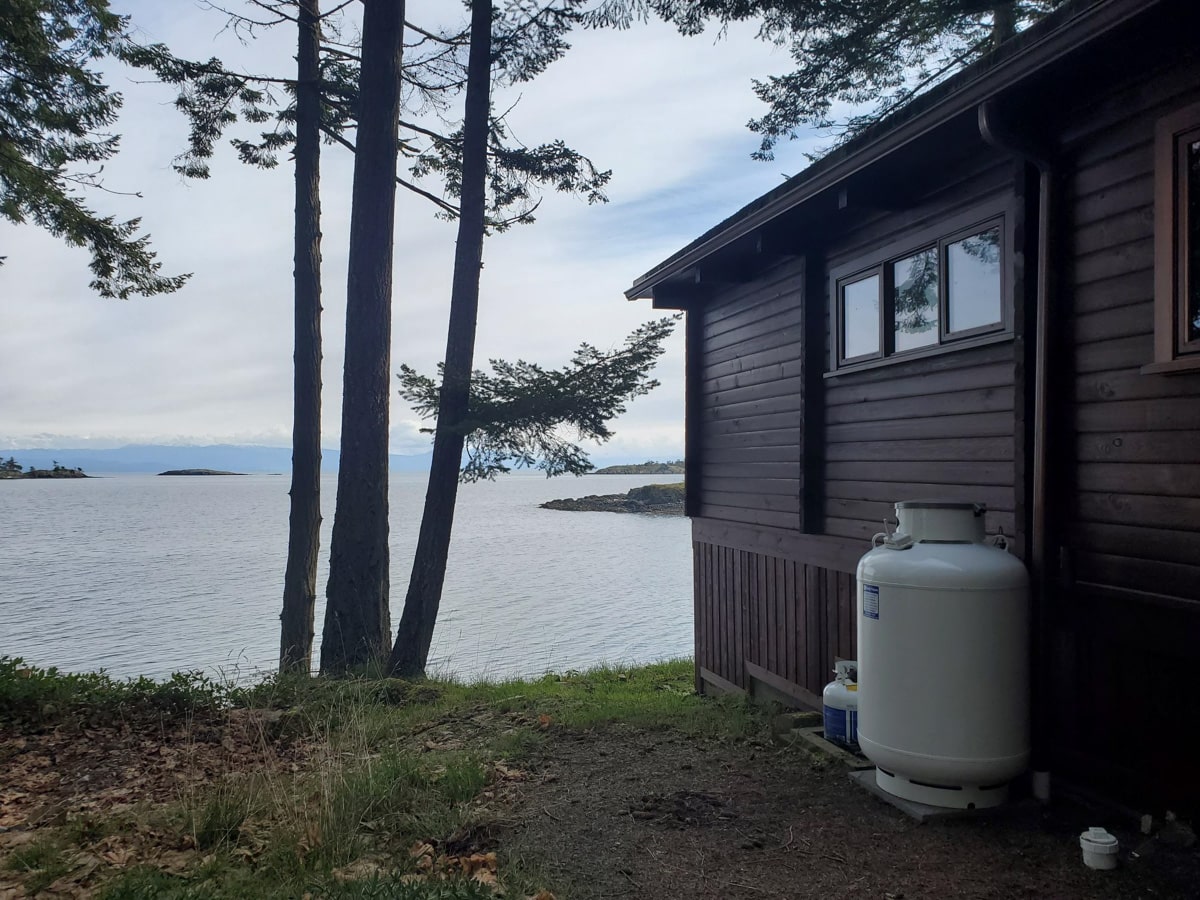
To size a residential propane tank correctly, you must calculate your total appliance British Thermal Unit (BTU) demand, peak winter consumption, and whether propane is your primary heat source. For many Mid-Island homes using propane for a fireplace, cooktop, and on-demand hot water, a single 420 lb (123 US gallon) vertical cylinder provides adequate capacity. Homes relying on propane as a primary furnace heat source, running pool heaters, or powering backup generators require larger multi-cylinder manifolds or horizontal bulk tanks (such as 500 US gallons) to prevent run-outs during cold weather.
Key Sizing Thresholds for Residential Propane
Propane vessels fall into two main regulatory and design categories: portable/stationary cylinders (governed by Transport Canada rules) and stationary ASME horizontal tanks governed by provincial pressure vessel safety regulations.
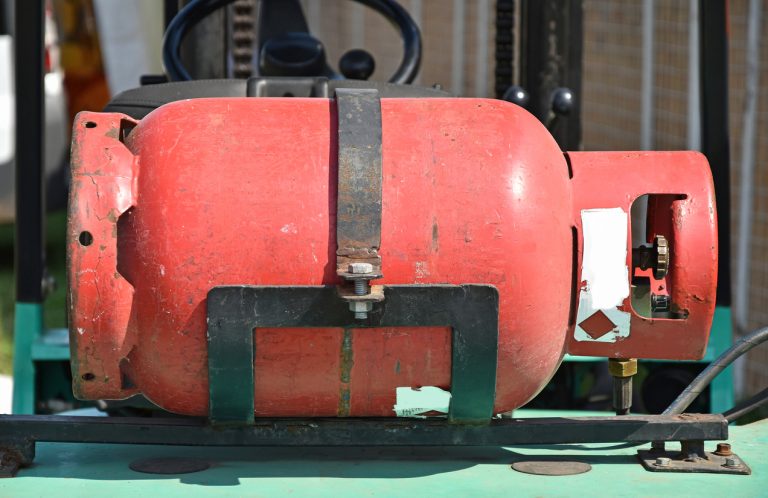
100 lb Cylinder
~80 Litres
Single low-demand appliance (e.g., secondary fireplace or cooktop).
Upright against an exterior wall; requires manual monitoring.
200 lb Cylinder
~160 Litres
Moderate intermittent use (cooktop + hot water). Sale only.
Upright exterior placement; equipped with liquid level gauge.
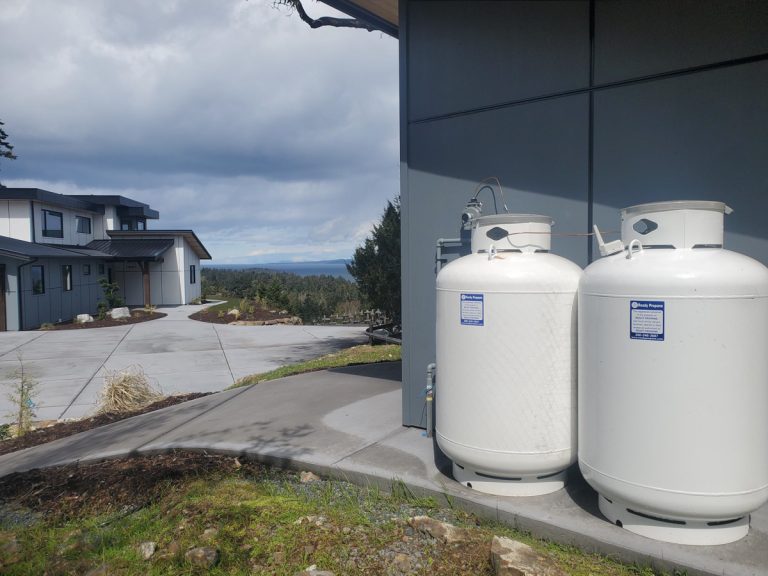
420 lb Cylinder
~335 Litres
Fireplace + cooktop + on-demand hot water. Available for rent or sale.
Upright on a solid concrete pad adjacent to the building.
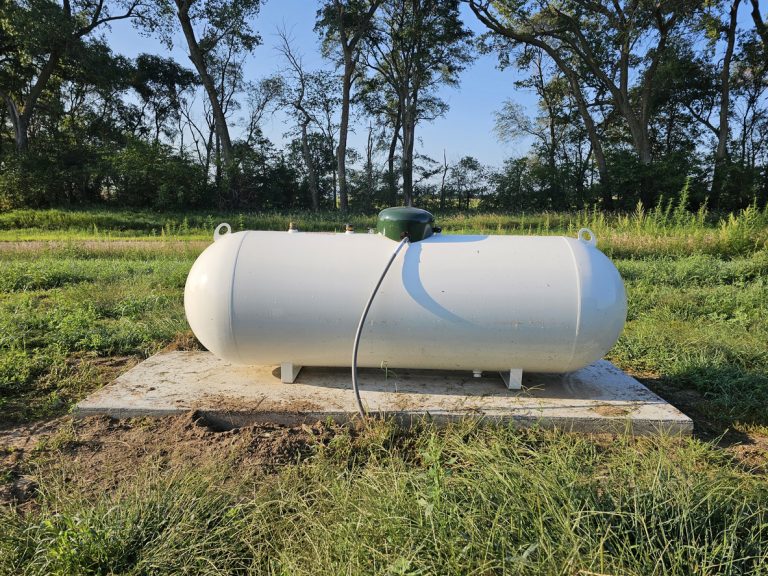
500 USWG Tank
~1,500 Litres
Primary central heating, high-demand hot water, pool heater, backup generator.
Set back 10+ feet from property lines/buildings on a concrete pad.
Factors That Influence Your Home’s Propane Tank Size
1. Total Appliance BTU Load
Every propane appliance has a BTU rating indicating its fuel consumption at maximum output. A high-efficiency on-demand water heater can draw up to 199,000 BTUs/hour when running, while a gas fireplace might draw 30,000 BTUs/hour. Adding the maximum simultaneous load gives a baseline for vaporization and storage requirements.
2. Primary Heat vs. Supplemental Use
If propane is your secondary fuel—supplementing a heat pump or wood stove—consumption remains low and predictable. However, if propane fires your central furnace, fuel draw spikes sharply during winter cold snaps across Nanaimo, Parksville, and the Alberni Valley. Larger storage ensures your system maintains adequate pressure when temperatures drop.
3. Backup Generator Requirements
Standby generators consume fuel at a higher rate during power outages. Homes in rural areas such as Errington, Coombs, or Horne Lake that experience frequent winter storm interruptions need dedicated, high-capacity storage. A dedicated generator setup requires careful monitoring so backup power remains available when the main grid fails.
Requesting a Site Assessment
Every home on Vancouver Island has unique topography, access paths, and heating demands. Rather than guessing your fuel requirements, request a formal site assessment before buying or renting equipment. Ready Propane assesses your property’s physical access (including driveway clearances for 4WD delivery trucks) and calculates precise fuel storage requirements based on your licensed gas-fitter’s system specifications.
Cylinders vs. Horizontal ASME Tanks
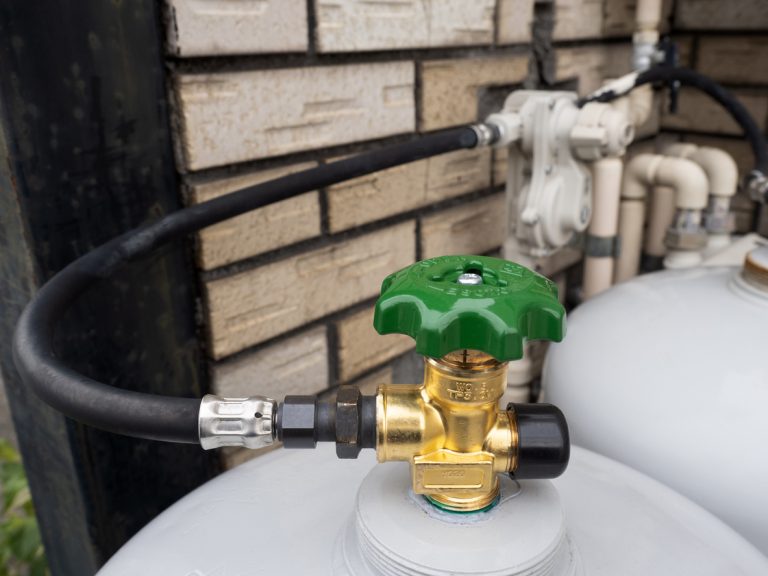
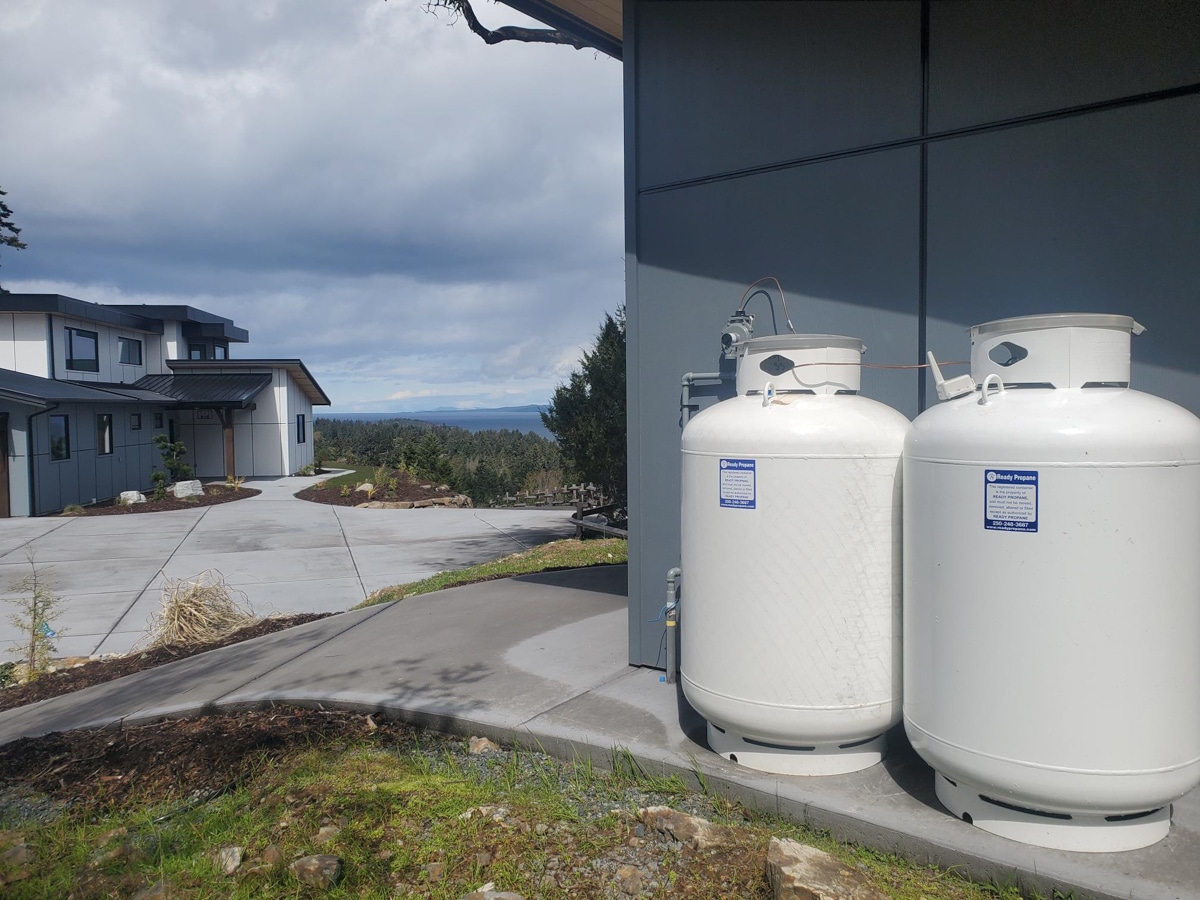
Vertical cylinders (such as 420 lb units) offer a compact footprint, making them popular for residential properties in urban and suburban Mid-Island neighbourhoods. They can be manifolded (connected together) using specialized regulator kits to double total storage capacity.
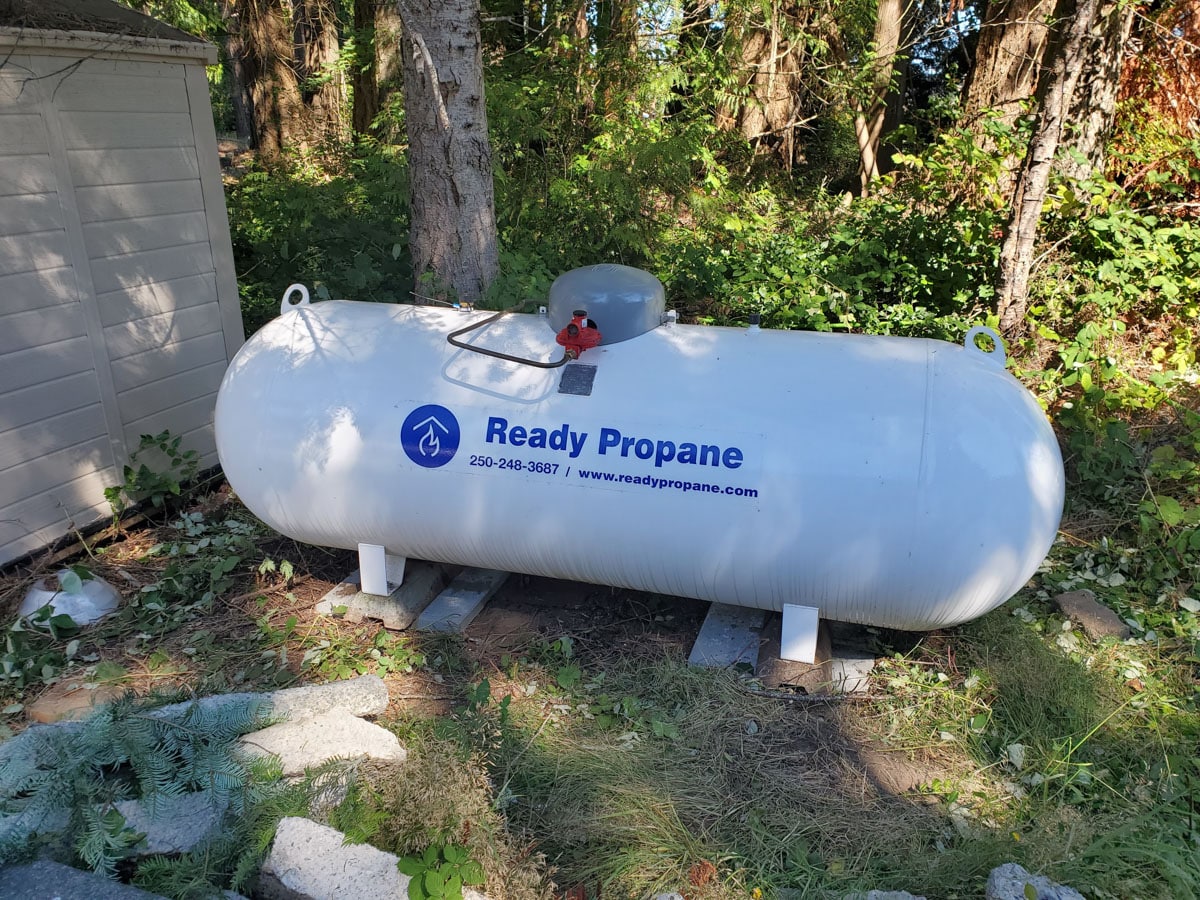
Horizontal ASME tanks (starting at 250 to 500 US gallons) are permanent bulk storage units. They feature high-capacity vaporization rates suitable for whole-home heating, agricultural applications, and large properties. These tanks require specialized delivery equipment and specific clearance distances from building openings, ignition sources, and property lines.
FAQ
Frequently Asked Questions
Get the Right Propane Tank Size for Your Mid-Island Home
Don’t guess when it comes to your home’s winter heating and energy supply. Ready Propane’s local Parksville team provides straightforward site assessments across Mid-Vancouver Island to ensure your system meets safety codes and appliance demands without unnecessary equipment costs. Speak directly with our local yard staff today.
Call Ready Propane at 250-248-3687
or