Is Your Propane Cylinder Expired? How to Read Its Date and Arrange Requalification
Under Transport Canada regulations, portable steel and aluminum propane cylinders expire 10 years after their original date of manufacture. Once a cylinder reaches its 10-year expiry mark, propane suppliers cannot legally refill it until it undergoes formal inspection, replacement of pressure relief components, and official requalification stamp renewal by a Transport Canada-certified facility.
Important Service Notice: Ready Propane provides specialized Transport Canada requalification for 33 lb/43 lb forklift cylinders, and 100 lb, 200 lb, and 420 lb vertical steel cylinders. Ready Propane DOES NOT requalify standard 20 lb or 30 lb barbecue/RV cylinders. Small barbecue cylinders should be exchanged or recertified through local retail exchange centers.
How to Read Date Stamps on Your Propane Cylinder
Because certain home installations consume very low fuel volumes over time, standard rental agreements are not financially practical. The following setups are designated as sale-only:
Decoding the Stamp
- Original Manufacture Date: Expressed as Month and Year. For example, 05 16 indicates manufacture in May 2016. This cylinder remains valid for fuel fills through May 2026.
- Requalification Markings: If a cylinder has been inspected previously, you will see a series of numbers and letters ending in a letter symbol (such as E or A) flanked by digits indicating the requalifier’s identification number and testing year.
Equipment Handled by Ready Propane
Ready Propane provides shop-based cylinder inspection in Parksville and specialized on-site mobile requalification across Mid-Vancouver Island for qualified bulk cylinders.
20 lb & 30 lb Cylinders
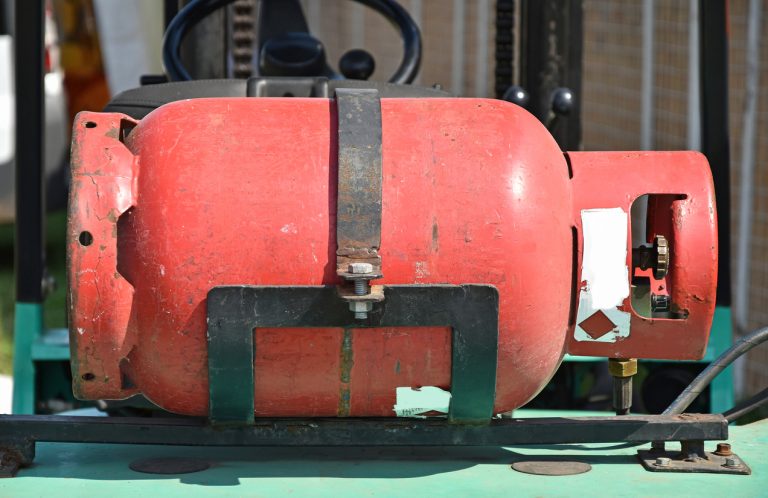
33 lb & 43 lb Forklift Cylinders
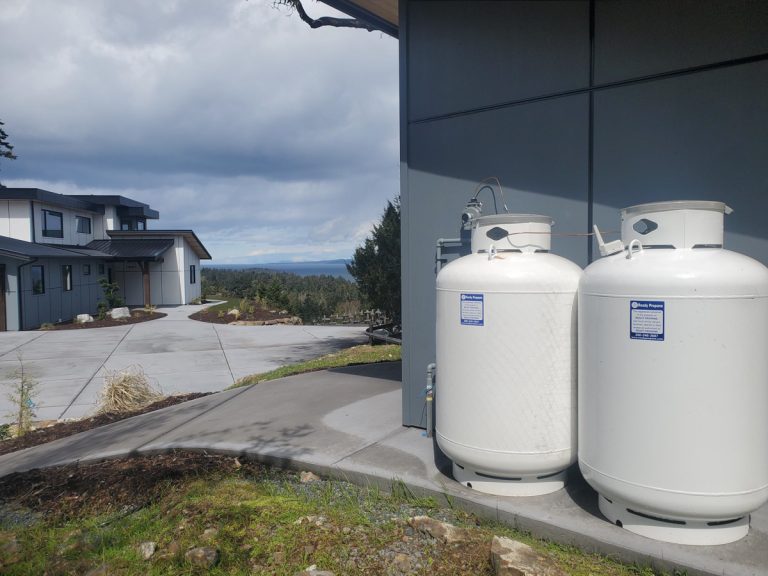
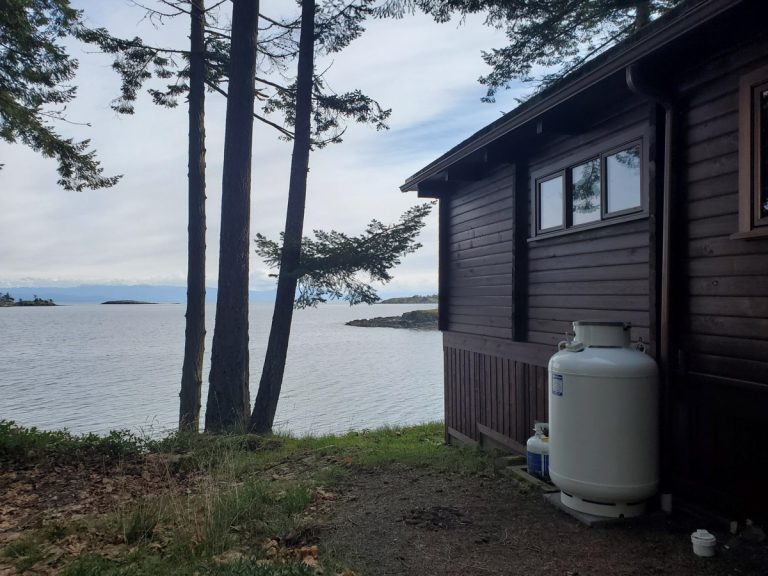
100 lb / 200 lb / 420 lb Cylinders
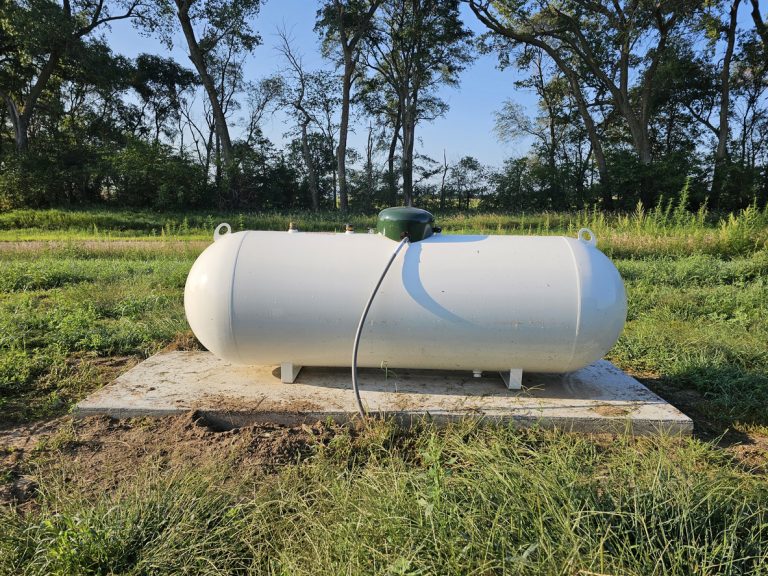
Horizontal ASME Storage Tanks
What Does Requalification Involve?
Propane cylinder requalification is a strict safety procedure regulated by the Transport Canada CAN/CSA-B339 standard. It involves:
1. External Visual Inspection: Technicians examine the body, foot ring, valve collar, and welds for structural corrosion, line gouges, bulges, or heat damage.
2. Valve Replacement: The primary pressure relief valve is removed and replaced with a certified new component.
3. Pressure & Leak Testing: Remaining operational valves undergo functional pressure checking.
4. Stamp Documentation: Upon passing inspection, the technician stamps the new requalification date code into the collar and logs the serial number.
How to Prepare Your Cylinder for Requalification
To ensure a safe service appointment, follow these operational rules:
- Burn the Fuel Down Completely: For on-site service on 200 lb or 420 lb cylinders, the vessel must be completely empty with zero internal vapor pressure before technicians can safely extract the valves. Run your connected appliances until they flame out naturally.
- Alternate Heating Prep: Connect a backup cylinder to your regulator manifold before burning the main tank completely empty.
- Drop-Off Rules: Cylinders brought to the Parksville yard must be empty. Contact the office in advance to confirm daily shop capacity.
FAQ
Frequently Asked Questions
Schedule Transport Canada Cylinder Requalification
Keep your commercial forklift fleet or residential bulk cylinders fully compliant with Canadian safety regulations. Contact Ready Propane’s Parksville shop to schedule on-site service for 100 lb–420 lb steel cylinders or arrange shop drop-off for forklift units.
Call Ready Propane at 250-248-3687
or